

Sod Brokers

Which grass belongs in your yard.

There is no best grass. There is the one that suits your sun, your soil and how hard the lawn is going to get used. Here is how the six we keep on hand actually differ, in plain terms.

Don't take our word for the texture.

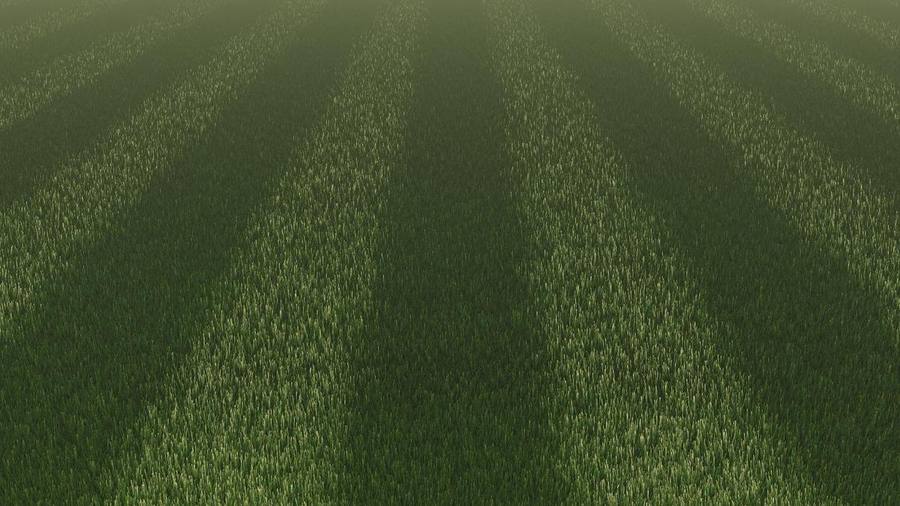
Every grass below is drawn live from its published cultivar numbers: blade width, shoot density, colour, how it takes a mower. Switch varieties and watch the turf become the next one. Then come run your hand over the real thing at the yard.

Zeon Zoysia

Zoysia matrella

1.5–2.5 mm blade mow 0.75–2″

EMPIRE Zoysia

Zoysia japonica

5–7 mm blade mow 1–2″

Centipede

Eremochloa ophiuroides

3–5 mm blade mow 1–2″

TifTuf Bermuda

Cynodon dactylon × transvaalensis

1.5–3 mm blade mow 0.5–2″

Tifway 419 Bermuda

Cynodon dactylon × transvaalensis

1.5–3 mm blade mow 0.5–1.5″

Palmetto St. Augustine

Stenotaphrum secundatum

7–10 mm blade mow 2.5–4″

Rendered live

Drag across the turf to part it. The blades spring back the way that species does. The mower is yours too.

The fine-bladed premium zoysia. Dense enough to feel like carpet, and the most shade-tolerant zoysia we can get.

Mow height
0.75–2″
Blade width
1.5–2.5 mm
Relative price
Premium
Shade
●●●●
Wear
●●●●
Drought
●●●●
Upkeep
●●●●

Best for

Showcase front lawns, and shadier yards where bermuda would thin out.

Watch out for

It builds thatch if you let it get tall, and it is slow to fill in if you damage it.

Zeon is a matrella zoysia, which is the fine-textured branch of the family. Blades run under 2.5 mm, and shoot density is the highest of anything on this list. That density is where the carpet feel comes from, and it is also why weeds struggle to get a foothold once it knits together.

It holds up in about four hours of direct sun, which is the practical reason to choose it over bermuda on a lot with mature hardwoods. It is not a shade grass in the way St. Augustine is, but it is the best of the zoysias.

The honest tradeoff is upkeep. Cut it low and often, often enough that a reel mower is not overkill, and plan on dethatching every couple of years. Let it grow tall and it gets spongy underfoot.
The practical zoysia. Medium blade, forgiving, and noticeably less work than Zeon for most of the same benefits.

Mow height
1–2″
Blade width
5–7 mm
Relative price
Mid
Shade
●●●●●
Wear
●●●●
Drought
●●●●
Upkeep
●●●●●

Best for

Homeowners who want the zoysia look and feel without a reel mower in the garage.

Watch out for

Coarser than Zeon up close, and it wants more sun.

EMPIRE is a japonica, medium-coarse at 5 to 7 mm. Standing next to Zeon the difference is obvious; from the street, much less so, and it costs less and asks less of you.

It takes a rotary mower at 1 to 2 inches without complaint, which is the single biggest reason we point homeowners here. It also greens up reasonably early for a zoysia.

Give it five or six hours of sun. In heavier shade it thins, and thin zoysia is slow to recover because it spreads by stolons rather than seed.

The low-input choice, and the most common lawn in the CSRA for good reason. Light green, slow growing, cheap to keep.

Mow height
1–2″
Blade width
3–5 mm
Relative price
Value
Shade
●●●●●
Wear
●●●●●
Drought
●●●●●
Upkeep
●●●●

Best for

Larger yards, rental properties, and anybody who would rather not fertilise four times a year.

Watch out for

It will not take traffic, and it is genuinely easy to kill with kindness. Over-fertilising causes decline.

Centipede has been called the lazy man's grass for eighty years and the nickname is earned. It wants roughly a quarter of the nitrogen bermuda does, and it grows slowly enough that mowing every ten days is fine.

It prefers acidic soil, which most of the sandy clay around Augusta already is. Do not lime it unless a soil test tells you to. Pushing the pH up is one of the reliable ways to cause decline.

It is naturally a lighter green than zoysia or bermuda. That is the cultivar, not a deficiency, and reaching for iron or nitrogen to darken it is how people get into trouble.

Where it genuinely does not work: dog runs, kids' goal mouths, driveway edges people cut across. It has no meaningful recovery from wear.

The drought-tolerant bermuda. Full sun, heavy use, and it comes back from damage faster than anything else here.

Mow height
0.5–2″
Blade width
1.5–3 mm
Relative price
Mid
Shade
●●●●
Wear
●●●●●
Drought
●●●●●
Upkeep
●●●●

Best for

Sunny yards with children and dogs, sports use, and anywhere irrigation is limited.

Watch out for

No shade tolerance at all. Under trees it simply will not persist.

TifTuf was selected specifically for drought performance and it holds colour through dry spells that make other bermudas go off. In a CSRA August that is worth real money in water.

Wear recovery is its other advantage: it spreads aggressively by both stolons and rhizomes, so a worn patch fills in on its own within weeks during the growing season.

The price of all that is sun and mowing. Eight hours of direct sun is the floor, and it grows fast enough in June that a weekly cut is a minimum, not a target.

The long-standing athletic-field bermuda. Fine, dark, and it takes a beating. It is the sod you see on ball fields.

Mow height
0.5–1.5″
Blade width
1.5–3 mm
Relative price
Mid
Shade
●●●●
Wear
●●●●●
Drought
●●●●
Upkeep
●●●●●

Best for

Athletic fields, commercial installs, and lawns kept short and striped.

Watch out for

The highest upkeep on this list. It needs the mowing and the inputs to look like it does on a field.

419 has been the standard athletic bermuda for decades and the reason is durability under concentrated traffic. If the use case is a field, this is still the default.

It wants to be cut low, half an inch to an inch and a half, which in practice means often. Let it get away from you and scalping it back looks rough for a fortnight.

For a homeowner who wants bermuda, TifTuf is usually the better recommendation. We will say so rather than sell you the more expensive install.

The shade grass. Wide blunt blades, coarse texture, and it tolerates less sun than anything else we stock.

Mow height
2.5–4″
Blade width
7–10 mm
Relative price
Mid
Shade
●●●●●
Wear
●●●●●
Drought
●●●●●
Upkeep
●●●●●

Best for

Yards under mature trees where nothing else will hold on.

Watch out for

Chinch bugs, and cold. A hard CSRA winter can hurt it in a way it will not hurt zoysia.

St. Augustine is the answer when the honest assessment is that a lot has too much canopy for zoysia. Palmetto handles the deepest shade of anything on this list and does it at a reasonable price.

Recognising it is easy: a wide blade with a blunt, boat-shaped tip rather than a taper. Cut it high, 3 inches or more, because leaf area is how it survives low light.

Two real weaknesses. Chinch bugs find it, so a thinning patch in full sun in July deserves a look before you reach for fertiliser. And it is the least cold-hardy grass here; we are near the northern edge of where it is comfortable.

It also does not take traffic. Shade plus a path worn through it is a combination that ends badly.

Not sure what you already have? Bring us a piece of it.

Cut a plug about the size of your palm, bag it, and bring it by. We'll tell you what species it is, whether it's healthy, and what will blend with it. Matching an existing lawn is the most common reason a patch job looks wrong a year later.

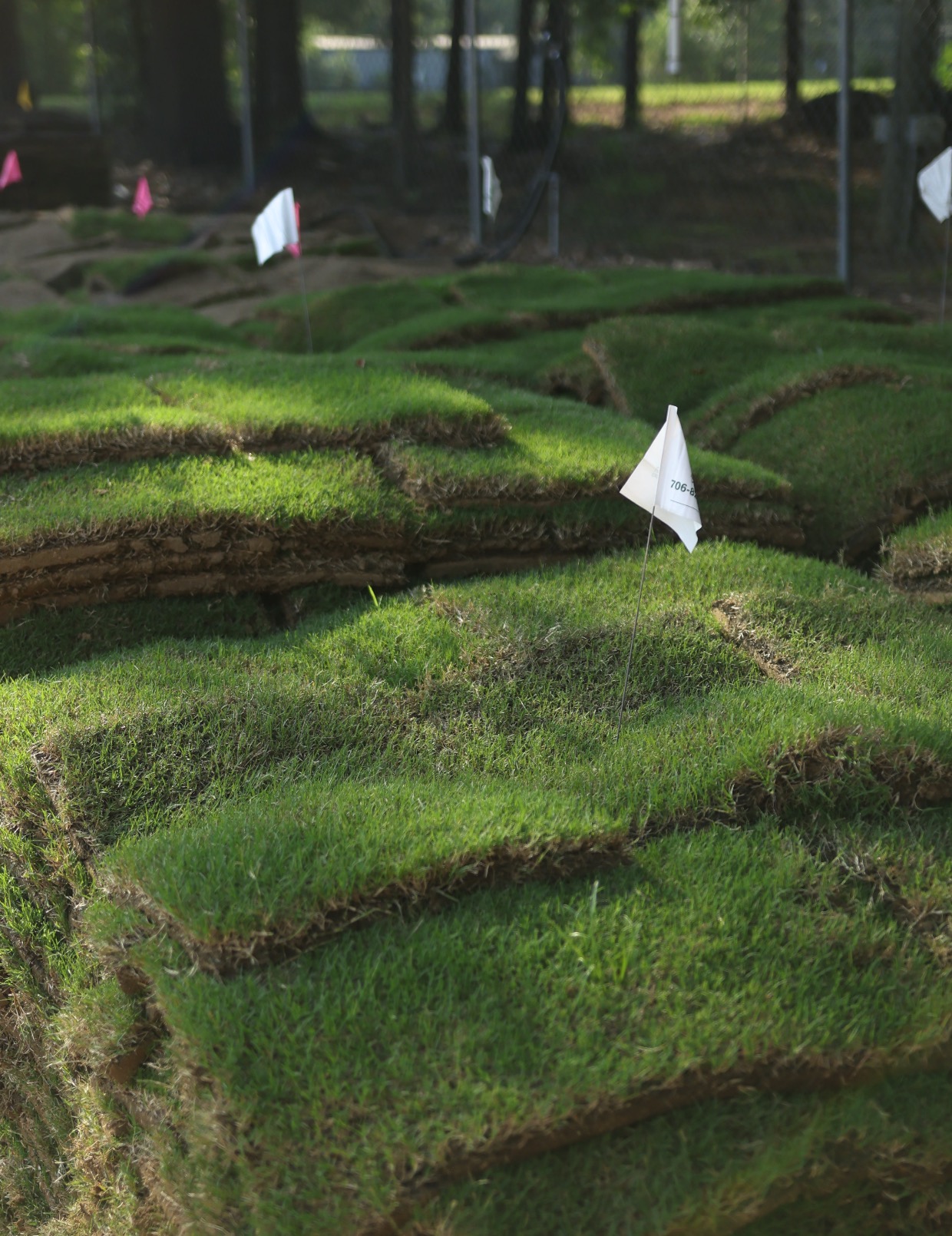
Stacks of freshly cut sod slabs marked with order flags in morning light
  1. Cut a plug

    Palm-sized, an inch or two deep so the roots come with it. From the middle of the lawn, not the edge.

  2. Bring it by

    No appointment needed. It takes a couple of minutes and it costs nothing.

  3. Leave knowing

    What you've got, what will match it, and whether the problem is the grass or the conditions it's sitting in.

Compare them side by side

Draft content This variety list is illustrative: varieties typical of the CSRA, with agronomy from published cultivar and extension data. It has not been confirmed against what Sod Brokers actually stocks. Pricing is shown as relative tiers only, never as figures.

Comparison of six sod varieties by texture, mow height, tolerance ratings and relative price
Measure Zeon ZoysiaEMPIRE ZoysiaCentipedeTifTuf BermudaTifway 419 BermudaPalmetto St. Augustine
Species Zoysia matrellaZoysia japonicaEremochloa ophiuroidesCynodon dactylon × transvaalensisCynodon dactylon × transvaalensisStenotaphrum secundatum
Blade width 1.5–2.5 mm5–7 mm3–5 mm1.5–3 mm1.5–3 mm7–10 mm
Mow height 0.75–2"1–2"1–2"0.5–2"0.5–1.5"2.5–4"
Shade tolerance ●●●● ●●●●● ●●●●● ●●●● ●●●● ●●●●●
Wear / traffic ●●●● ●●●● ●●●●● ●●●●● ●●●●● ●●●●●
Drought tolerance ●●●● ●●●● ●●●●● ●●●●● ●●●● ●●●●●
Upkeep required ●●●● ●●●●● ●●●● ●●●● ●●●●● ●●●●●
Relative price PremiumMidValueMidMidMid

Upkeep is rated by how much the grass asks of you, not by quality, so a low score there is a feature for most homeowners.

Still not sure?

Tell us the address and roughly how much sun the yard gets, and we will tell you what we would put down, including when the answer is the cheaper grass.

Ask us which one