

Your yard. We'll figure it out
Bring in a piece of your lawn and we'll work out the rest with you.
Four things worth sorting out before you buy
What you already have
Most people don't know the type of grass in their yard, and we can help. Bring in a plug and we'll name the species, tell you whether it's healthy, and say whether the problem is the grass or the conditions it's sitting in.
What will actually thrive
Not the best grass. The right one for your sun, your soil and how the lawn gets used. Those three things narrow the list right down before price even comes up.
How much you really need
It's easy to under-order, because people measure the lawn and forget the offcuts. We'll check your figure against the actual shape of the yard before anything is cut.
When you're laying it
Sod goes down all year here. What changes is the first few weeks: summer sod wants water on it, winter sod wants patience.
Not sure what you already have? Bring us a piece of it
Cut a plug about the size of your palm, bag it, and bring it by. We'll tell you what species it is, whether it's healthy, and what will blend with it. Matching an existing lawn is the most common reason a patch job looks wrong a year later.
-
Cut a plug
Palm-sized, an inch or two deep so the roots come with it. From the middle of the lawn, not the edge.
-
Bring it by
No appointment needed. It takes a couple of minutes and it costs nothing.
-
Leave knowing
What you've got, what will match it, and whether the problem is the grass or the conditions it's sitting in.
The questions we'll ask
Nothing mysterious about it, these are just what we need to know. Come with rough answers and we can usually settle the variety in one conversation.
- How much direct sun does it get?
- Count the hours at the shadiest point, not the sunniest. That number alone rules most of the varieties in or out.
- What's growing there now, and how is it doing?
- A lawn that thinned out has a reason. Replacing it with the same grass and no change in conditions gets the same result.
- Who uses it, and how hard?
- Dogs, children and a worn path to the gate are wear problems. Some grasses recover from that on their own and some never do.
- Do you have irrigation?
- Not required, but it changes the recommendation. Without it, the drought-tolerant options move up the list considerably.
- How much upkeep do you actually want?
- Answered honestly, this is the most useful question of them all. The finest-bladed grass is the wrong buy if nobody is going to cut it weekly.
- What's under it?
- Sand, heavy clay, construction debris a foot down. What's beneath the sod decides more than the sod does.
We'll help you get it right
A lawn that dies costs you twice. These are the four ways it usually happens.
Buying the grass off the picture
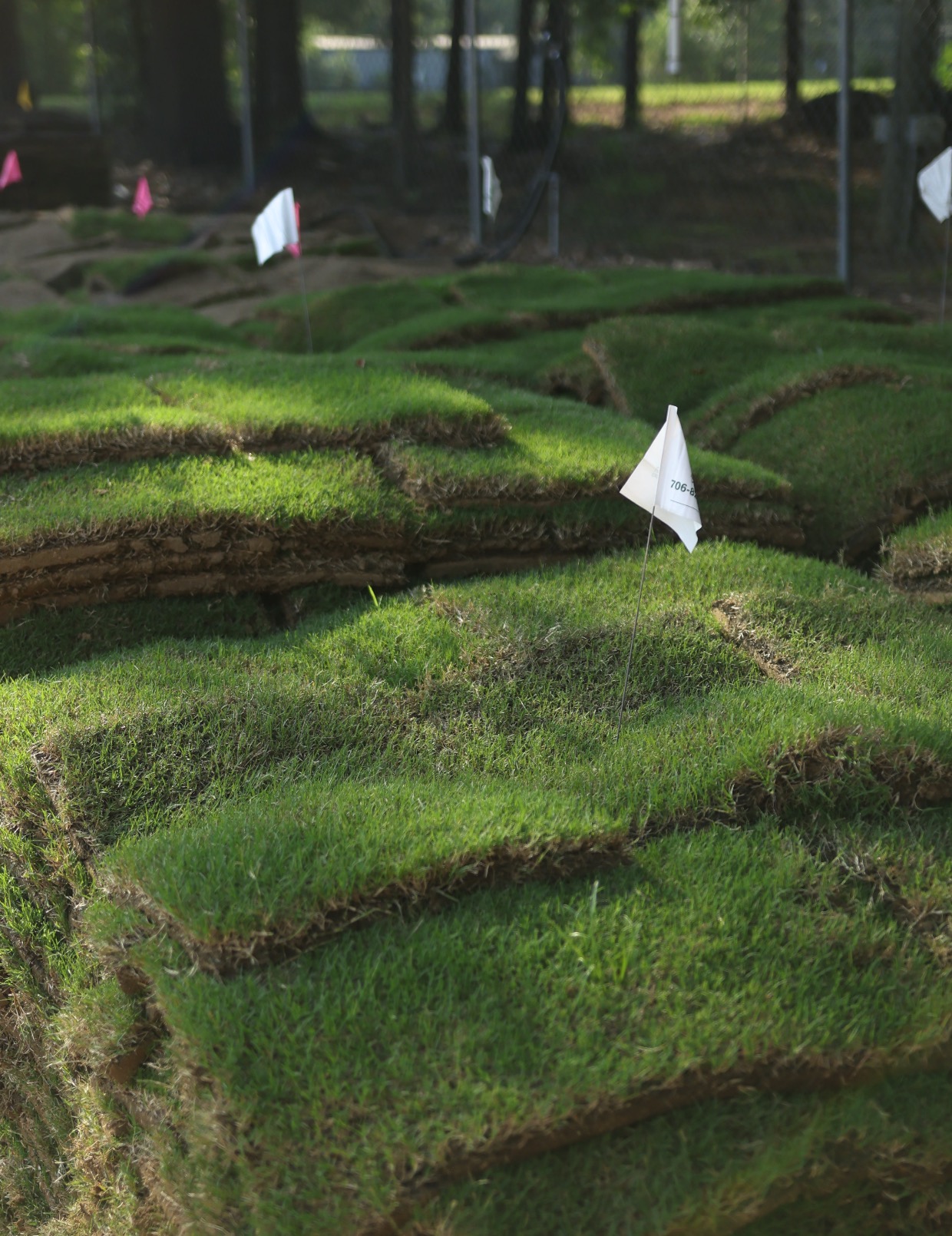
The dark, fine-bladed lawn in the photograph is usually bermuda cut low and fed hard. It looks like that because of the mowing regime, not because of what was bought.
Sod as a fix for a drainage problem
If the old lawn drowned, new turf will drown too. We'll help you work out what's causing it, because the grade has to be right before any sod goes down.
Over-feeding centipede
It's the most common lawn in the CSRA and the easiest to kill with kindness. Treating it like bermuda causes decline, and the instinct to add more when it looks pale makes it worse.
Ordering before the ground is ready
Prepare the ground first, then come and get what you need. We're not going to run out while you're getting ready.
Sod is sold four ways
A pallet is the unit everybody pictures. It isn't the only one, and for a strip beside a driveway it isn't the right one. Here is what actually comes off the truck.
Single slab
2.7 sq ft
16" x 24", cut off the pallet. There's no minimum, so three pieces to patch a worn strip by the gate is a real order.
Half pallet
200 to 225 sq ft
A front bed, a side yard, or the shaded patch under a tree that never took. Which end of that range depends on the grass.
Full pallet
450 to 500 sq ft
The unit most whole lawns are quoted in. Bermuda and centipede stack more to a pallet than zoysia or St. Augustine do.
Roll
225 to 350 sq ft
30" x 100' is 250 sq ft in bermuda and centipede, 225 in zoysia. The wider 42" x 100' is 350 sq ft, in bermuda and centipede only. Fewer seams over open ground, but a roll is heavy enough that you want machinery.
Not sure which you need? The estimate below works it out from your square footage, for the grass you're actually laying.
Bring us a rough number and we'll check it
Multiply length by width in feet for each section of lawn and add them together. This gives you something to bring us, not an order. We'll sanity-check it against the actual shape of the yard, because beds, curves and awkward corners are where the measurement usually goes wrong.
Under-ordering is the more painful mistake. Running a pallet short on a Saturday afternoon is a genuinely annoying way to lose a weekend, and the second delivery rarely arrives the same day.
What you'd actually buy
Those figures are how our pallets actually stack, not a rule of thumb. Treat the result as a conversation starter. We'll confirm the real number before anything is cut.
While you're here
Mulch, pine straw, topsoil and play sand by the bag. Stepping stones, edging and fire pit kits. It's the same counter and there's no minimum on any of it.
Come ask us
Bring a sample, bring a measurement, or bring both. No minimum order, no appointment, and no charge for working it out with you.